Start your free 3-day trial — no credit card required, full access included

Perioperative management - Carotid shortening for high-grade kinking stenosis of the internal carotid artery type I/III on the right

  1. Indications

    The aim of surgically eliminating narrowing of the carotid artery is to prevent strokes and to reduce the associated disability and mortality rates.

    For a kinking stenosis of the internal carotid artery (ICA), intervention is indicated in the following cases:

    • Neurological symptoms (TIA, amaurosis fugax, hemiparesis, stroke)
    • Bilateral high-grade kinking stenosis with a degree of stenosis > 70%, even in the absence of neurological symptoms
    • Pseudo-occlusion caused by kinking

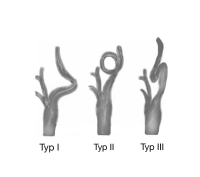
    Types of kinking stenosis of the ICA according to Weibel and Field*

    PM 300-1b

    Type I

    Elongation (tortuosity)

    Type II

    Looping (coiling)

    Type III

    Kinking

    *Weibel J, Fields WS (1965) Tortuosity, coiling, and kinking of the internal carotid artery. Neurology 15, I 7±18, II 462±468.

    Video example

    PM 300-2
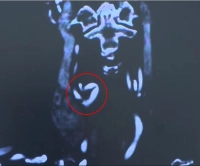
    CT angiography Right ICA with kinking and luminal narrowing type III
  2. Contraindications

    Surgery is not indicated in:

    • asymptomatic unilateral kinking with moderate stenosis
    • coiling without stenosis as an anatomical variant
  3. Preoperative diagnostic work-up

    Medical history

    • Vascular risk factors: smoking, arterial hypertension, lipid metabolism disorders, diabetes mellitus

    Clinical neurological examination

    • > 90% of all stenoses and occlusions of supraaortic vessels (ICA, vertebral artery, etc.) remain clinically asymptomatic and are discovered as incidental findings in screening examinations or preoperative imaging
    • The symptoms of a lesion in the vessels supplying the brain depend on the affected vessel, the course over time and the predominant collateralisation (e.g. via the circle of Willis)
    • Typical symptoms of a carotid artery (internal carotid artery) lesion include:

    ◊ motor or sensory hemi-symptoms (e.g. "hemiplegia/hemiparesis")

    ◊ Amaurosis fugax (temporary unilateral blindness: ophthalmic artery)

    ◊ cortical dysfunction (speech, visual-spatial perception)

    ◊ homonymous bilateral visual field restrictions are usually not characteristic symptoms of internal carotid artery stenosis

    • Important: carotid artery auscultation is not suited for detecting stenoses.

    Cardiological examination

    • 30% of patients present with coronary heart disease warranting treatment

    Colour-coded duplex sonography

    Ultrasonography of the extracranial vessels supplying the brain should always examine all vessels in the transverse and longitudinal plane:

    • Common carotid artery from proximally to the carotid bifurcation
    • Carotid bifurcation with the dorsolaterally originating internal carotid artery
    • External carotid artery
    • Vertebral artery in segments V1 to V3
    • Subclavian and axillary arteries

    Search for haemodynamically significant plaques and their morphological description (B-scan):

    • Hyperechoic versus hypoechoic
    • Homogeneous versus inhomogeneous
    • Smoothly delineated versus irregular configuration

    Plaque parameters with unfavourable prognosis:

    • Hypoechoic internal plaque structure
    • Long plaque > 1 cm
    • Plaque diameter > 4 mm
    • Longitudinal pulsation of the plaque distad

    According to international consensus, stenoses should be quantified according to the NASCET criteria.

    Contrast-enhanced MR angiography or alternatively a CT angiography

    • Validation of the findings or for treatment planning
    • Assessment of intracranial vessels and possible parenchymal damage (previous cerebral infarctions)

    Digital subtraction angiography (DSA) of the arteries supplying the brain

    • only if a conclusive diagnosis is not possible with the noninvasive modalities and therapeutic consequences result
    • Example: kinking with luminal narrowing not visible on MRI or CT

    CT or MRI of the brain

    • in symptomatic patients, parenchymal imaging before planned revascularisation
    • in asymptomatic patients, such imaging can provide valuable additional information, e.g. evidence of a clinically silent cerebral infarction

    Chest radiograph

    Laboratory tests

    • Full blood count
    • Electrolytes
    • Coagulation
    • Renal function
    • Liver enzymes
    • Blood lipids
    • Blood group

    In all patients with atherosclerotic carotid stenosis, look for any secondary sequelae of arteriosclerosis (coronary heart disease [CHD], peripheral arterial occlusive disease [PAOD])!

  4. Special preparation

    • Mark affected side
    • Fasting for 2–6 hours, depending on clinical protocol.
    • Continue platelet aggregation inhibitors; in dual antiplatelet therapy decide each case according to the patient's cardiac risk profile
  5. Informed consent

    General surgical risks

    • Major bleeding; blood transfusions; hepatitis/HIV transmission from allogeneic blood units.
    • Allergy/incompatibility
    • Wound infection
    • Thrombosis/embolism
    • Injury to skin, vessels and nerves, e.g. due to positioning.
    • Keloids

    Specific surgical risks

    • Cerebral circulation problems/stroke
    • Impaired blood supply to the eyes and even blindness
    • Injury to cervical nerves: Hoarseness; loss of voice; swallowing and breathing problems; drooping corner of the mouth; shoulder weakness
    • Secondary bleeding, haematoma-related tracheal compression, emergent surgical decompression
    • Injury to glomus caroticum: Arrhythmias, fluctuating blood pressure
    • Cardiopulmonary complications: Myocardial infarction, pneumonia, pulmonary embolism
    • Hyperperfusion syndrome: Seizures; neurologic deficits; migraine-like headaches; cerebral oedema and bleeding
    • Suture aneurysm -> reoperation
    • Intraoperative angiography: contrast-induced renal insufficiency

    Specific risks in surgery under regional anaesthesia (cervical plexus block)

    • Horner syndrome (drooping eyelid)
    • Sensation of warmth in the face, hoarseness, breathing problems
    • Concomitant anaesthesia of adjacent structures: brachial plexus, cervical spinal cord
Anaesthesia

General anaesthesiaRegional anaesthesia (cervical plexus) & infiltration anaesthesia in coopera

Activate now and continue learning straight away.

Single Access

Activation of this course for 3 days.

US$9.06 inclusive VAT
Add to cart

Most popular offer

webop - Savings Flex

Combine our learning modules flexibly and save up to 50%.

from US$4.20 / module

US$50.48/ yearly payment

price overview

vascular surgery

Unlock all courses in this module.

US$8.41 / month

US$100.96 / yearly payment

Add to cart
to top